NOAA Great Lakes Environmental Research Laboratory Blog

The latest news and information about NOAA research in and around the Great Lakes

April 21, 2026
by GLERL Communications Team
Comments Off on Eyes in the Sky: How Hyperspectral Flights Improve Knowledge of Great Lakes Winter Ice

Eyes in the Sky: How Hyperspectral Flights Improve Knowledge of Great Lakes Winter Ice

Figure 1. Aerial view of Western Lake Erie ice conditions, out the window of a Cessna 210 aircraft during a January 23, 2025 survey.

It was a cold and icy winter in 2025-2026. Lake ice affects everything from snowfall and fishery populations to recreational activities and the multibillion-dollar commercial shipping industry, making Great Lakes ice cover data highly valuable. However, once winter arrives boats and buoys are removed from the water to protect them from ice, so the NOAA Great Lakes Environmental Research Laboratory (GLERL) monitors the Great Lakes by taking to the sky. GLERL has been using a technique called hyperspectral imagery for over a decade to monitor Great Lakes harmful algal blooms in the summer. This method, which uses cameras to collect wide band data from across the electromagnetic spectrum, can also be utilized to monitor lake ice.

One possible method is monitoring ice conditions from the sky, using a camera that collects a wide band of data from across the electromagnetic spectrum. By using a technique called hyperspectral imagery, GLERL has been collecting data over the Great Lakes for over a decade, frequently to monitor harmful algal blooms during the summer. Starting in 2024, our researchers began to explore flying a hyperspectral camera to monitor lake ice during the winter.

What is hyperspectral data?

Hyperspectral data or imagery contains much more information than a visible image. Traditional images capture what a human eye sees (visible light spectra), which consists of three bands: red, green and blue. The ‘hyper’ in hyperspectral means that the data collected captures parts of light beyond what our eyes can see, such as the near-infrared (thermal/heat range). Instead of three bands like our eyes or a traditional camera captures, hyperspectral cameras capture over 150 bands. How does all that extra information fit into an image? Hyperspectral data isn’t analyzed as a flat 2D image, but forms a 3D data cube. Different materials reflect and absorb light in a unique way, creating a spectral fingerprint similar to the uniqueness of a human fingerprint. By collecting hyperspectral data we are able to shift from looking at an object to identifying it by its spectral fingerprint. A spectral signature plot (or spectra plot) provides a graphical representation of a selected pixel in a hyperspectral image. The x-axis represents the wavelength in nanometers while the y-axis represents the intensity, also referred to as brightness, which is a measure of the amount of light being reflected at a particular wavelength. The blue, green and red vertical lines indicate the specific bands used to render the current hyperspectral image; in Figure 2, which shows different hyperspectral images, they were selected to mimic the standard red-green-blue spectrum seen with a human eye.

Figure 2. Comparison of spectral signatures from Lake Erie hyperspectral flights: open water (top left), lake ice (top right), a harmful algal bloom (bottom left), and a calibration tarp used as a baseline (bottom right). The images above show distinct variances that can help to identify water conditions. The open water spectra (top left) shows a steep drop after 600 nm due to the way water absorbs light – the red wavelength is the first to be absorbed. The lake ice image (top right) displays the highest y-axis values of intensity due to the reflective nature of ice, which bounces back nearly all visible light. The harmful algal bloom spectral plot (bottom left) shows a distinct green peak, a characteristic of chlorophyll reflectance. While the final spectral plot for the calibration tarp (bottom right) is a much flatter spectra overall because the gray tarp is designed to be spectrally neutral by not reflecting light.

The first step in hyperspectral data collection begins with outfitting a small aircraft – a Cessna 210 in our case – with the hyperspectral camera (Figure 3). Once the camera is installed, the pilot flies a pre-defined flight path surveying an area of interest. Throughout our most recent ice flight mission, the aircraft maintained a survey altitude of 10,500 ft, capturing high resolution ice data.

Figure 3. Cessna 210 with hyperspectral camera system and power source installed in a modified luggage compartment.

Quick Shifts, Complex Conditions

The Great Lakes are known for their propensity to change rapidly. Many know the phrase “if you don’t like the weather, wait five minutes”, and the lakes are no different. Figure 5 below shows three visible webcam images from the same viewpoint highlighting the shift of Lake Erie ice sheets across a three hour timeframe. Winds and currents have a dramatic impact on how quickly the ice moves. This shows how monitoring, prediction, and reporting ice conditions can be challenging.

Figure 4. Webcam imagery from Lake Erie Channel Marker 2 during Jan 23, 2026 ice survey. (Realtime imagery accessed through GLERL’s ReCON webpage: https://www.glerl.noaa.gov/res/recon/station-cmt.html)

How is Great Lakes ice tracked and forecast now? A combination of numerical models and satellites that use radar, visible and infrared imagery determine ice conditions. Ice condition information is crucial for shipping in the Great Lakes, as commercial shipping traffic still transects the lakes throughout the winter months when conditions allow – even when ice is present. However, existing methods to monitor and track ice in the Great Lakes have limitations: satellites only provide periodic static images, and numerical models require high-fidelity data for validation. To address these gaps, GLERL is exploring hyperspectral imaging as a way to improve current monitoring systems and improve model predictions.

After hyperspectral data is collected it can be processed multiple ways. One of the products from these ice flights is true color imagery. Figure 4 below consists of four north-to-south passes over Lake Erie when covered with ice. At first glance one can observe a few different features by eye in the visible imagery: wind-blown snow, rough ice, possibly open water and a wispy cloud that created a slight shadow.

Figure 5. Overview of true color results from hyperspectral ice survey Jan 23, 2026 (left), with a snapshot view of ice conditions and possible features (right).

Looking Forward

In addition to using airplanes, we can also use aerial drones to capture hyperspectral data. To leverage this emerging technology, GLERL established an aerial drone program in 2024. This provides a significantly different perspective since aerial drones fly much lower to the ground,  allowing them to capture much higher resolution images. Additionally, some drones are able to hover in one place while collecting data.

Collecting hyperspectral data from planes and drones is critical to understanding ice cover and ecology in the Great Lakes. By monitoring harmful algal blooms with hyperspectral imagery, we can safeguard drinking water intakes for millions of people, while also gaining insight into the dynamics of ecosystems in the lakes. Capturing hyperspectral ice cover data is fairly new but the potential payoff is big. Providing timely ice cover data at a resolution and accuracy never before available benefits all those that depend on the Great Lakes. Ice impacts everything from wildlife populations and health to the freighters that navigate the ice moving almost 200 million tons of materials each year, keeping our regional economy strong.

The ice features identified in Figure 4 are just the beginning of ice analysis based on hyperspectral data. More detailed analysis can confirm the ice classification (for example, determining different types or ice formation or thickness of ice) with more confidence and accuracy, thanks to the wealth of data that is embedded in a hyperspectral image. Advanced techniques are able to turn big datasets – including hyperspectral data – into valuable information. One technique is called deep learning, which allows an algorithm to study a big data set and then make predictions about that data. In our case, a deep learning algorithm  studied 150 bands of an image and then described more about the ice types than we would be able to tell by looking at it with our red-green-blue detecting eyes. This takes trial and error and requires us to have the “ground truth” in order to train and check the algorithm. Finally, GLERL also conducts an analysis of how Great Lakes ice conditions progressed throughout the previous winter. Comparing the past winter’s conditions to historical trends, helps us understand the key factors that influence ice formation, how ice conditions have changed over time, and how we might predict future ice cover. With an increase in both the quality and quantity of ice condition data, GLERL predictions will continue to improve services for a broad range of Great Lakes stakeholders.

July 18, 2025
by GLERL Communications Team
Comments Off on June 21, 2025 Storm Causes Significant Meteotsunami and Seiche on Lake Superior

June 21, 2025 Storm Causes Significant Meteotsunami and Seiche on Lake Superior

On June 21, 2025 there were numerous social media reports showing dramatic water level changes across Lake Superior, with photos and videos of water at beaches receding to expose dry land over the course of a couple of hours and then rapidly rising again. These rapid water level changes were experienced by coastal communities all around Lake Superior, with reports and images from areas including Munising, Michigan; Thunder Bay, Ontario; Duluth, Minnesota; and Algoma, Ontario. These significant water level fluctuations had notable impacts on boating and shipping, with ships remaining offshore to avoid groundings resulting in delays, vessel docks being damaged and overturned, and small boats being stranded or pushed into docks and slips. However, no injuries have been reported.

NOAA water level data from Lake Superior shows that the storm caused large fluctuation in water levels, triggering a multi-stage event, with an atmospheric pressure-induced meteotsunami, wind-driven storm surge, and strong seiche activity all interacting to generate the extreme water level fluctuations observed on the lake. The strongest impacts were observed in the lake’s southeastern region, around Whitefish Bay and Sault Ste Marie.

Ketzel Levens, meteorologist with the National Weather Service at the Duluth, MN Weather Forecast Office (WFO), stated that a significant weather system transited through the region causing this event.

At NWS Duluth, our primary concern with this event was warning on the initial line of thunderstorms that moved across Lake Superior in the early morning hours of June 21, which were producing strong winds and hazardous to mariners. Once the line of storms had passed, we were monitoring for reports of large hail or wind damage when we were alerted to large water level fluctuations occurring in Ashland, WI along with subsequent minor flooding in the Maslowski Beach area. Seiche and meteotsunami events can be difficult to message, due to their displacement in timing from the convective system that initiates them, as well as a sparse data network to actually track water level fluctuations so some events may go un-observed, especially if they are nocturnal. We also don’t have a specific headline to issue for these events, though depending on the severity level they might fit under Lakeshore Flood Advisory or Special Marine Warning. Additionally, we don’t get events of this magnitude as frequently as some of the southern Great Lakes, though low magnitude seiches kicked off by synoptic weather systems are common. Thus, we put out a call for reports in order to better understand the impacts being felt around Lake Superior, and try to tie those to the few water level sensors that do exist as well as the timing of the storm system. Reports poured in, with significant water level fluctuations observed around Lake Superior that caused water to pull out of harbors and then come back in and flood over docks. It also produced a strong current in and out of the Duluth Harbor Canal, with observed flows up to 8 feet/second from the USGS gauge! That current led to chaotic wave action at the mouth of the canal leading to some hazardous conditions for mariners. These reports along with archived weather and water station data will allow an internal team to perform operational research on the event, hopefully making for more efficient pattern recognition in the future! Additionally, due to the quick nature of these events, even high resolution models that have 1-hour granularity may not be able to capture them. More warn-on forecast systems with higher temporal granularity could be helpful in identifying events as well as performing post event analysis.

NOAA Water Level Station 9099004 in Point Iroquois, MI (https://tidesandcurrents.noaa.gov/stationhome.html?id=9099004).

NOAA operates five water level stations on Lake Superior, which are used to monitor, track, and understand lake processes such as the extreme fluctuations experienced by coastal communities this weekend. The Point Iroquois water level station (9099004) is situated on Whitefish Bay in southeastern Lake Superior in Michigan’s Upper Peninsula, and has recorded water level measurements every 6 minutes since September 1995. On June 21, 2025, this station recorded a remarkable 45 inch increase in water level in Whitefish Bay over less than 2.5 hours, the largest water level surge ever recorded in the station’s 30-year history.

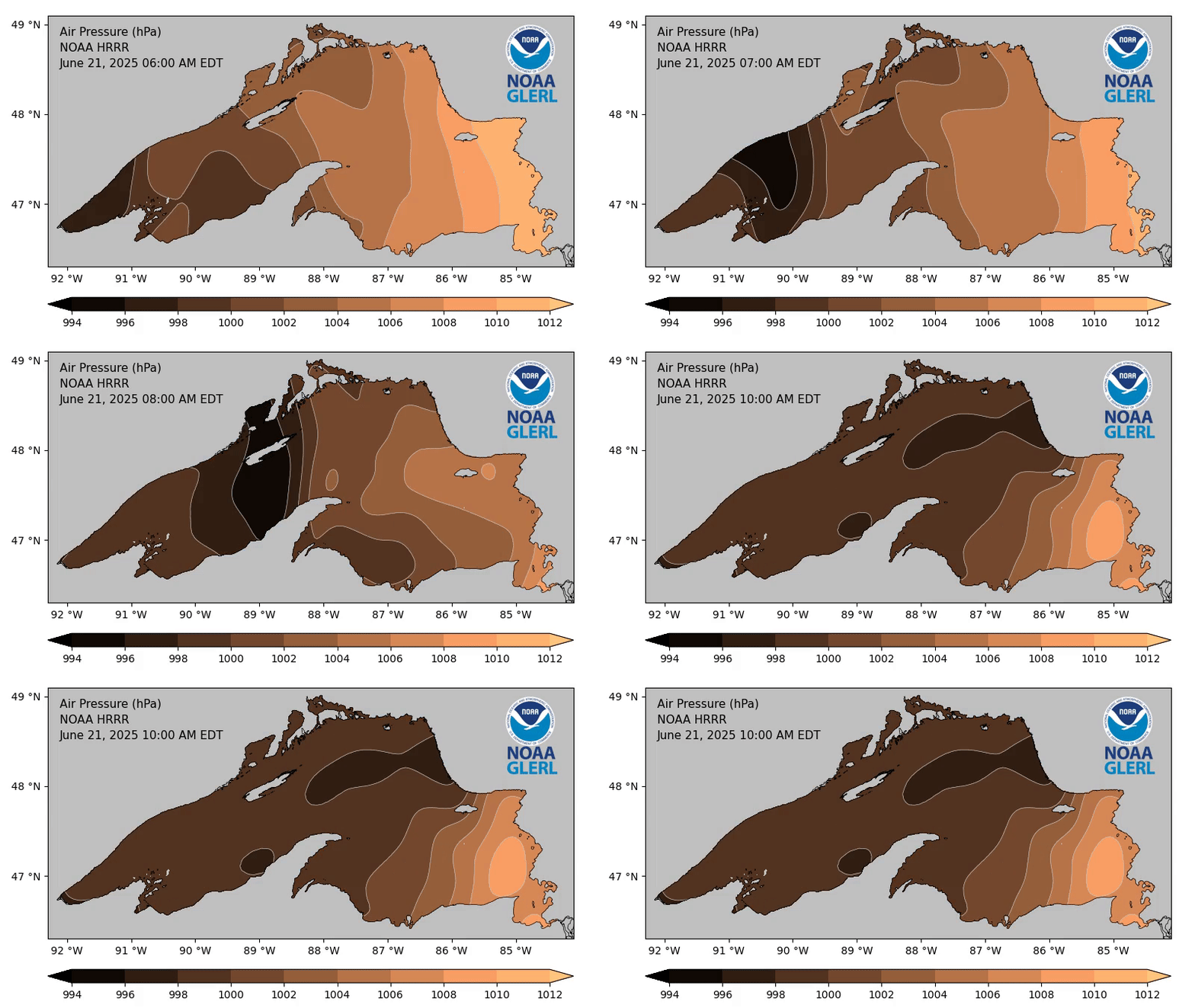
Animation of air pressure conditions over Lake Superior on June 21, as simulated by the NOAA High-Resolution Rapid Refresh (HRRR) weather forecast model.

The water level fluctuations began with a low pressure system that moved from west to east across Lake Superior between approximately 6:00 AM and 10:00 AM EDT on June 21. As a strong, low pressure storm moves across the lake, air pressure differences cause it to push down unevenly on the lake surface, which raises water levels with the storm’s passing. Under certain conditions, this displacement can result in the formation of large-scale waves known as meteotsunami. Meteotsunami happen regularly on the Great Lakes, forming when a storm is moving in the same speed and direction as the wave that’s building in front of it. This amplifies the wave, and as the wave reaches the shore, it produces a sudden rise in water level. As the June 21 storm moved west to east across Lake Superior, it produced a significant meteotsunami in eastern Lake Superior, and a water level rise of 19.3 inches between 8:00 AM and 9:48 AM was recorded at the Point Iroquois station as a result.

NOAA Buoy 45004 in eastern Lake Superior (https://www.ndbc.noaa.gov/station_page.php?station=45004).

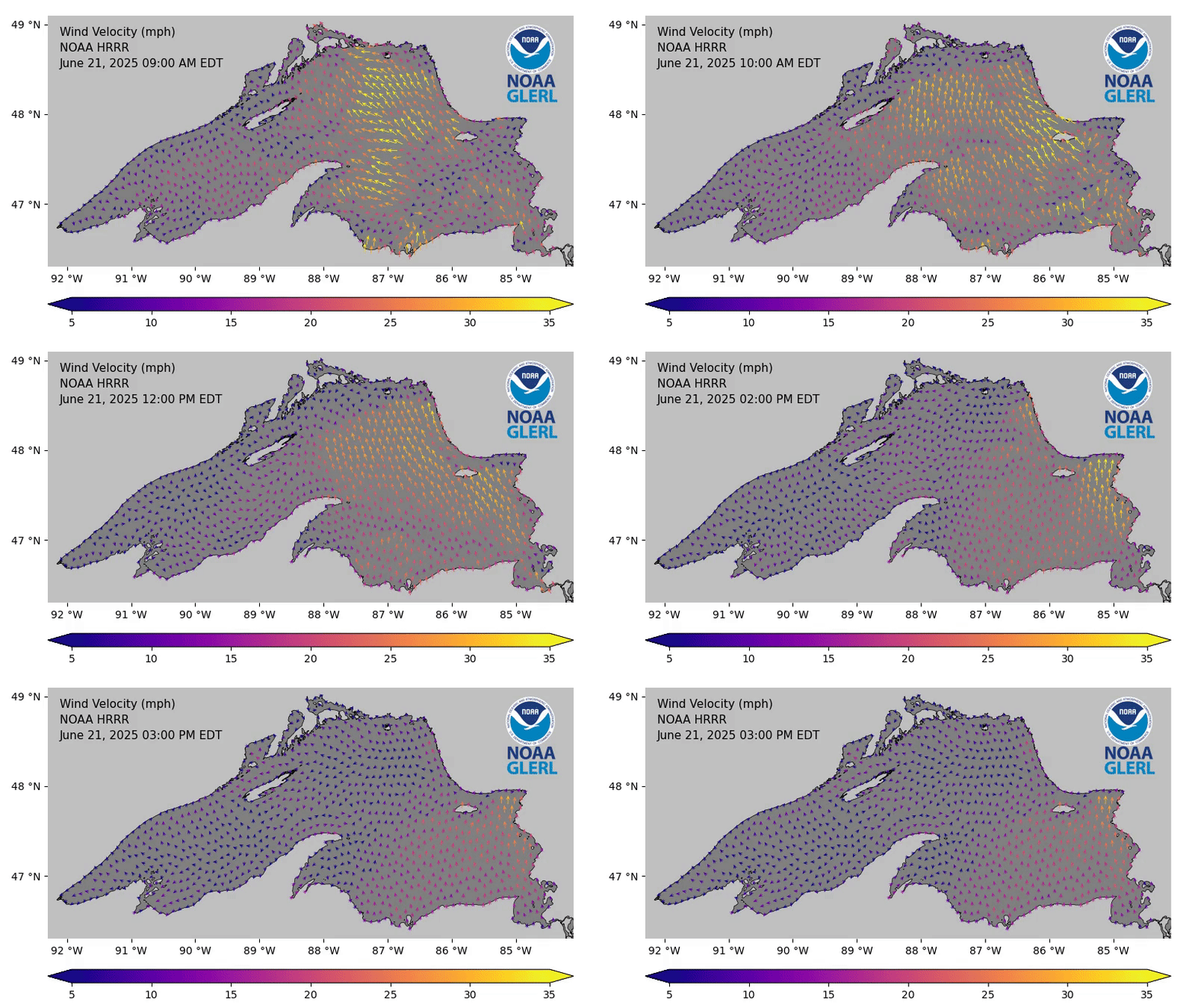
At the tail end of the passing storm, eastern Lake Superior experienced strong sustained winds out of the south-southeast. NOAA’s Eastern Lake Superior Buoy (45004) recorded sustained winds of up to 20 to 35 mph with gusts up to 40 mph between approximately 9:00 AM and 1:00 PM.

Animation of wind conditions over Lake Superior on June 21, as simulated by the NOAA High-Resolution Rapid Refresh (HRRR) weather forecast model.

These strong winds produced a wind-driven storm surge, driving water to surge back out to the northern and western portions of the lake and away from the southern shore. The magnitude of wind-driven storm surges on the Great Lakes depends on both the speed of the wind and the distance it has to travel over the lake and build momentum, known as “fetch”. The strong south winds experienced in eastern Lake Superior produced a storm surge on the north-northwest shore, which was amplified both by lingering low pressure to the north, and because the lake was primed by the meteotsunami that had immediately preceded it. Additionally, there was a water level drop of -43.3 inches between 9:48 AM and 11:24 AM associated with the storm surge recorded at the Point Iroquois station. As the storm finished moving through and conditions on Lake Superior calmed, the displaced lake surface rebounded to produce strong seiche activity, with a water level rebound of +45.4 inches from 11:24 AM to 1:41 PM.

Water level measurements from the NOAA Point Iroquois Water Level Station, showing extreme fluctuations in response to the June 21 storm.

The 45.4 inch water level rise observed on June 21 was the highest-magnitude surge ever observed at the Point Iroquois station, which has continuous data dating back to September 1995. In fact, surges above 36 inches have only occurred on four other days in the station’s 30-year record, most recently a 42.3 inch magnitude surge that occurred on June 29, 2018. This makes the June 21 event quite uncommon and remarkable in its magnitude and complexity

Daily maximum surge magnitude at the NOAA Point Iroquois, MI Water Level Station (9099004), dating back to September 1995. Surge is calculated here as the range in water level over a rolling 6-hour period.

seiche is the oscillation of water back and forth across a large body of water that can continue for several days. The Great Lakes can act like giant bathtubs, with water sloshing back and forth after being pushed around by a storm. Lake Superior’s size and shape result in it having a characteristic seiche period of appoximately 8 hours, meaning it takes about 8 hours for water to slosh back and forth across the lake (e.g., between Duluth and Sault Ste. Marie). Seiche activity is almost always present on Lake Superior. Under typical conditions, seiche fluctuations are only a few inches in magnitude, but when triggered by a strong storm, they can be much larger. On June 21, the initial rebound observed in Whitefish Bay likely occurred primarily within the lake’s eastern basin, thus explaining its shorter period, then relaxing to a more typical east-west lakewide seiche with a roughly 8-hour period in subsequent oscillations.

Water level measurements from the NOAA Point Iroquois, MI Water Level Station (9099004), showing elevated seiche fluctuations in the days following the June 21 storm.

With a strong trigger like the June 21 storm, elevated seiche activity can persist for several days following the initial event. Seiche fluctuations exceeding 18 inches continued throughout the following day, and elevated seiche activity persisted on the lake through June 25, several days after the initial event.

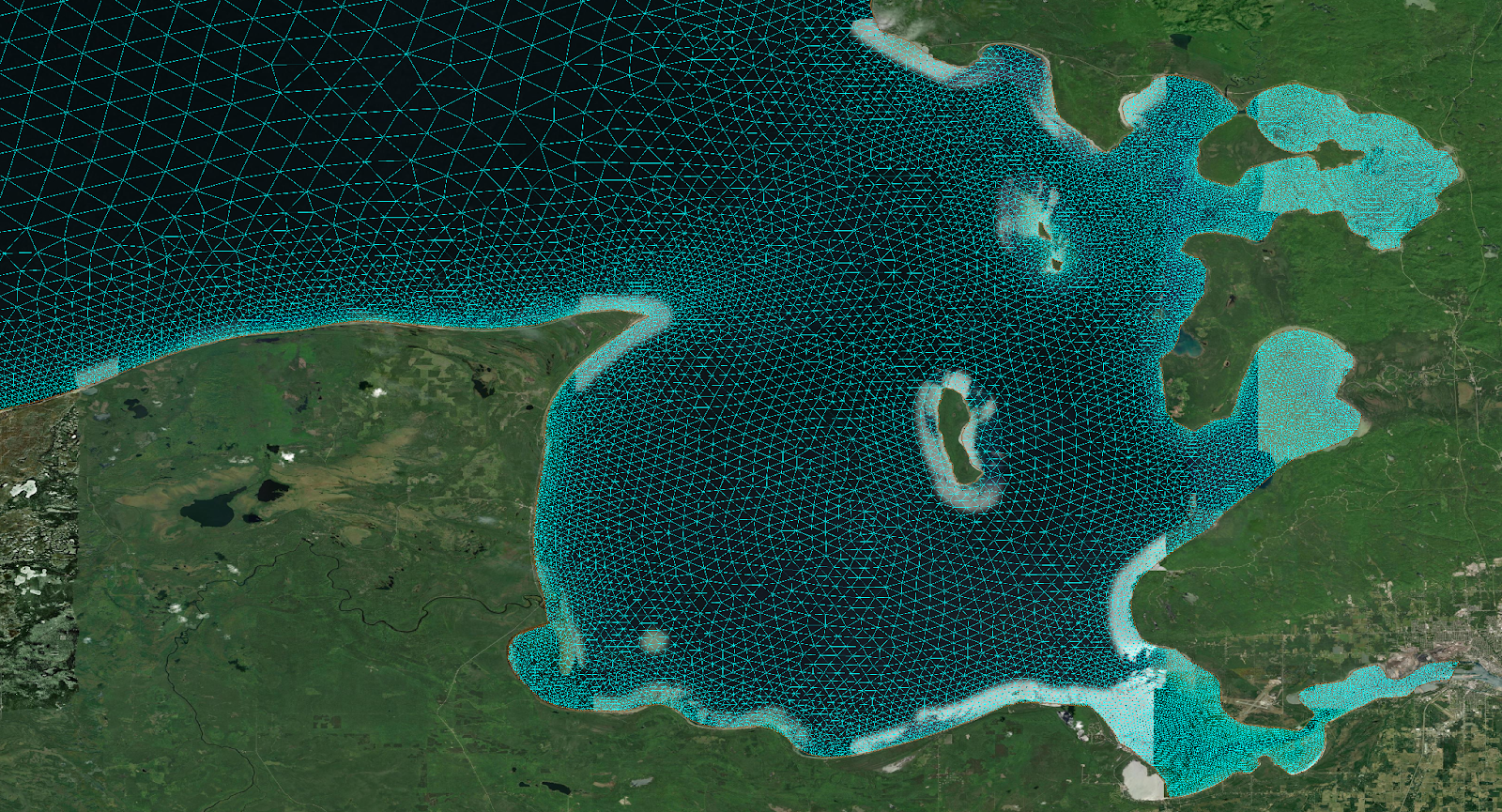
Model mesh for GLERL’s Lake Superior Forecast System in the Whitefish Bay region of Lake Superior.

Scientists at NOAA’s Great Lakes Environmental Research Laboratory (GLERL) are now working to understand exactly how water moved around the lake on that day. Existing Great Lakes forecast models, such as the Lake Superior FVCOM Forecast System are capable of simulating and forecasting many key processes in the lakes, such as currents and storm surges. However, fast moving squall lines, such as those that move across the lake to produce meteotsunami, often evolve too quickly to be fully represented in the hourly data generated by these models. Continued research and development of Great Lakes forecast models will be critical to understanding, simulating, and forecasting events like the June 21 storm’s impact on Lake Superior.

June 23, 2025
by GLERL Communications Team
Comments Off on Great Lakes Water Levels Down from Record Highs of 2017-2020

Great Lakes Water Levels Down from Record Highs of 2017-2020

Monthly lake-wide water levels on the Lake Michigan-Huron system showing declines in lake water levels over the past five years. Source: Great Lakes Water Level Dashboard, NOAA Great Lakes Environmental Research Laboratory, https://www.glerl.noaa.gov/data/wlevels/dashboard/.

Great Lakes water levels have taken a dip over the last few years. Only a few years ago, we were fielding questions related to record high water levels on each of the lakes. Now, as water levels return to near and sometimes even below average, the question arises: why the dramatic shift from very high water levels to the relatively lower water levels we are seeing now?

First, it is important to look at the current water levels in the context of the very long historical record of Great Lakes water levels. The historical record, which is officially coordinated by federal agencies in the U.S. and Canada, dates back to 1918. The NOAA Great Lakes Water Level Dashboard is a useful tool to explore this coordinated data. Here is where monthly mean water levels were in May 2025, relative to this long record back to 1918:

  • Lake Superior was about 2 inches below last year and almost 4 inches below its long-term average level for May, but about 20 inches above the record low May level. The overall range since 1918 is close to 4 ft.
  • Lake Michigan-Huron was about 8 inches below last year and close to 6 inches below its long-term average level for May, but 25 inches above the record low May level. The overall range since 1918 is a little over 6 ft.
  • Lake Erie was about 6 inches below last year, but 5 inches above its long-term average level for May and 40 inches above the record low May level. The overall range since 1918 is about 6.5 ft.
  • Lake Ontario was about 1 inch above last year, but close to 2 inches below its long-term average level for May. The Lake Ontario May level was about 35 inches above the record low May level. The overall range since 1918 is a little over 7 ft.

In the context of the long historical record, these recent levels are not so different from long term averages, but what is remarkable is how much change seen in Great Lakes water levels since 2020. We observed record high water levels on each lake at some point between 2017 and 2020. During that period, impacts included coastal flooding and property damage from erosion. When water levels are much below average, on the other hand, impacts include ecosystem changes and loss of wetland area, reduced capacity for shipping drafts, and changes to waterfront access and aesthetics.

Why did water levels come down?

Great Lakes water level changes on seasonal and longer timescales are the result of the combined influence of precipitation falling over the lake, runoff into the lake, and evaporation from the lake surface. We refer to the combination of these three factors as net basin supply (NBS). When the net inflow to a lake is more than the lake outflow, water levels will go up, and vice versa.

Components of Net Basin Supply to a Great Lake, including inflow, runoff, precipitation, evaporation, and outflow.
Components of Net Basin Supply to a Great Lake. Source: NOAA Great Lakes Environmental Research Laboratory flickr, https://www.flickr.com/photos/noaa_glerl/.

At a seasonal timescale, the lakes generally follow a pattern of lower levels during the winter months and higher water levels during the summer or early fall. During the winter, precipitation falls as snow and accumulates on land. In the spring, melting snow and precipitation falling as rain add water to the lakes, causing water levels to rise. Then, in the fall and early winter, when cold air enters the region, the temperature difference between warmer water and cooler air results in increased evaporation, driving water levels back down for the winter. When we see longer periods of high precipitation and/or low evaporation rates, we can expect increasing water levels, whereas during extended periods of low precipitation and/or high evaporation rates, we can expect water levels to decline.

Graphic showing how Great Lakes levels change with each season from winter low to spring rise, summer peak, and fall decline.
Great Lakes seasonal water level cycle. Source: NOAA Great Lakes Environmental Research Laboratory flickr, https://www.flickr.com/photos/noaa_glerl/.

High water levels were sustained over a multi-year period ending in 2020, largely a result of a sequence of years with very high precipitation. In fact, the five years ending in April 2020 were the wettest 5 years on record for the Great Lakes since the late 1890s. After 2020, precipitation was considerably less than during the 5-year period ending in 2020. Below is a graphic of annual precipitation since 1895 from NOAA Climate at a Glance.

Graph of Great Lakes Basin Annual Precipitation from 1895 to 2025
Great Lakes Basin Annual Precipitation from 1895 to 2025. Source: NOAA National Centers for Environmental information, Climate at a Glance: Regional Time Series, published May 2025, retrieved on May 12, 2025 from https://www.ncei.noaa.gov/access/monitoring/climate-at-a-glance/regional/time-series.

GLERL research is advancing seasonal to annual water level forecasts

The NOAA Great Lakes Environmental Research Laboratory (GLERL) hydrology team, including partners from the University of Michigan’s Cooperative Institute for Great Lakes Research (CIGLR), conducts research focused on better understanding and predicting the key factors driving seasonal and longer changes in Great Lakes water levels (primarily precipitation, evaporation, and runoff). The forecast tools produced by the GLERL-CIGLR team contributes to the official 6 month forecast of Great Lakes water levels produced by coordination between the U.S. Army Corps of Engineers and Environment and Climate Change Canada each month. The GLERL-CIGLR team is currently developing a next generation prediction system for subseasonal to annual water supply forecasts. This system will transition to sustained operations at the U.S. Army Corps of Engineers for application to seasonal water level forecast products. This new forecast system is being developed using machine learning approaches to predict subseasonal to annual precipitation, evaporation, and runoff based on the NOAA operational Climate Forecast System. The integration of atmospheric science, hydrology, data science, and research engagement creates a forecast of Great Lakes water levels that meets end user needs.

Resources

NOAA GLERL Great Lakes Water Levels
NOAA Great Lakes Regional Collaboration Network
U.S. Army Corps of Engineers Great Lakes Water Information
Cooperative Institute for Great Lakes Research, Great Lakes Forecasting

May 8, 2025
by GLERL Communications Team
Comments Off on Great Lakes Ice Cover Near Average for the 2025 Season

Great Lakes Ice Cover Near Average for the 2025 Season

Each spring, NOAA’s Great Lakes Environmental Research Laboratory (GLERL) conducts an analysis of how Great Lakes ice conditions progressed throughout the previous winter. This analysis, which compares the past winter’s conditions to historical trends, helps us understand the key factors that influence ice formation, how ice conditions have changed over time, and how we might predict future ice cover. Ice cover data is highly valued because it plays a critical role in both the ecology and economy of the Great Lakes region. Lake ice affects everything from snowfall and fishery populations to recreational activities and the multibillion-dollar commercial shipping industry.

The 2024-2025 winter Great Lakes ice season stayed close to long term normals following the near historic low ice levels seen in the 2023-2024 winter (Figure 1). One way that GLERL tracks ice cover is by looking at the daily percentage of ice cover across the Great Lakes, calculated by determining the area of the Great Lakes that are covered by ice and dividing that by the total surface area of the lakes. The daily percentage of ice covering each of the Great Lakes this winter is shown in the figure below.

Figure 1. Individual graphs of the percentage of ice cover of Lake Superior, Michigan, Huron, Erie, Ontario, and for all of the Great Lakes for the 2025 season.

However, despite colder temperatures than last winter, most of the lakes stayed slightly below long term averages on a daily basis through the season. Figure 2 shows 2025 daily ice cover percentages compared to 2024 ice cover values and other past seasons. Note that the 2025 ice season had an increase in ice cover compared to last year, but it did not approach record levels.

Figure 2. Daily ice cover percentage for the Great Lakes basin for 2024 (green line), 2025 (purple line) and the other years in the record 1973-2023 (blue).

Each of the Great Lakes responds differently to seasonal changes due to unique physical characteristics—particularly their size and depth. Deeper lakes, for example, retain heat longer and may experience delayed or reduced ice cover compared to shallower ones. Similarly, larger surface areas can influence how wind and air temperature affect ice formation. Figure 3 illustrates the differences between lakes by showing the size and depth of each lake. 

Figure 3. Size comparison of length and depth for the individual Great Lakes. Graphic courtesy of Michigan Sea Grant.

Let’s compare ice cover between Lake Michigan and Lake Erie. Lake Michigan, with its relatively deep basin, tends to warm and cool more slowly than shallower Erie. As a result, Lake Michigan experiences a more gradual formation of ice and typically has lower overall ice cover. In contrast, Lake Erie, the shallowest of the Great Lakes, loses heat more quickly and develops ice cover earlier in the season. As a result, Lake Erie quickly covers with ice when air temperatures stay below freezing.

This winter season began with warm water temperatures across the Great Lakes, with little-to-no ice coverage in December. However, temperatures dropped in January and Lake Erie saw above normal ice from late January to early March (Figure 4). Lake Erie, the smallest and shallowest lake, lost heat relatively quickly while the larger lakes didn’t reach the temperatures needed for ice generation until later in the season, or only over smaller portions of the lake. 

Figure 4. Daily ice percentage for Lake Erie for 2025 (black line), long term average (red) and the other years in the record 1973-2024 (blue).

Why did Ice Percentages Peak in Late February?

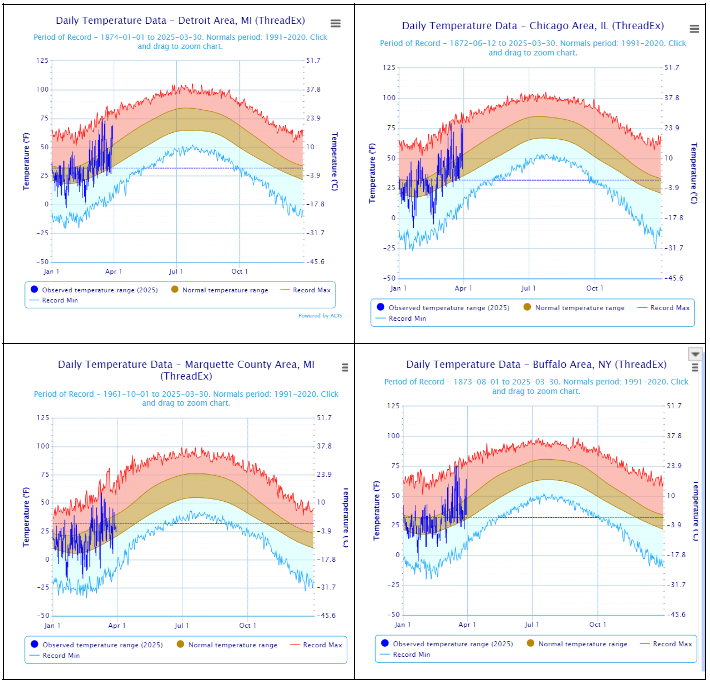
The first three weeks of February were cold, with below average air temperatures allowing ice to build. A shift occurred during the 4th week of February when above normal air temperatures were recorded across the Great Lakes, reversing ice growth. Figure 5 shows the air temperatures since January 1st, 2025 for select cities across the Great Lakes. The shift from cold, below normal temperatures to warm, above normal temperatures during the 4th week of February is evident at each location, regardless of geography.

Figure 5. Temperature graphics for January 1st through April 1st, 2025 at Detroit, MI (upper left), Chicago, IL (upper right), Marquette, MI (lower left), and Buffalo, NY (lower right). Observed temperatures in 2025 are shown in dark blue, with the normal temperature ranges shaded in tan.

Seasonal Averages: A look at the numbers

The 2024-25 annual maximum ice cover is compared to the long term average in the table below, showing that overall, maximum ice cover was close to average this season.

Table 1. Annual Maximum Ice Cover (%).

The average ice coverage between January and March is shown in the table below in comparison to the full season annual max ice cover above. Ice cover was typically below average.

Table 2. Average Ice Cover from January to March (%).

The number of days with ice coverage greater than 10% is shown. The majority of lakes and the basin-wide total both indicate that this winter was slightly below long term averages.

Table 3. Number of Days of Ice Cover Duration Greater than 10%.

The tables below show how this past winter ranked with respect to records from the previous 51 years. Much of the data indicates that ice cover in general was slightly below average.

Basin-WideSuperiorMichiganHuronErieOntario
28th36th26th21st10th23rd
Table 4. Maximum Ice Percentage (%) Annual Ranking 1973 through 2025.

Basin-WideSuperiorMichiganHuronErieOntario
38th38th37th38th29th24th
Table 5. Ice Duration (Number of Days > 10%) Annual Ranking 1973 through 2025.

Basin-WideSuperiorMichiganHuronErieOntario
36th39th36th36th25th28th
Table 6. Average Ice Cover (Jan-Feb-Mar) Annual Ranking 1973 through 2025

What was happening globally that played a role in determining ice cover in the Great Lakes?

During the winter, ice cover on the Great Lakes is influenced by four large-scale climate patterns from the Atlantic and Pacific: the North Atlantic Oscillation (NAO), the Atlantic Multidecadal Oscillation (AMO), the El Niño-Southern Oscillation (ENSO), and the Pacific Decadal Oscillation (PDO). These patterns describe conditions that can lead to above average or below average temperatures in the Great Lakes, depending on their position. In February, both the AMO and PDO drove strong and steady warming during the entire ice season – except for the month of February. February was marked by below-average air temperatures, including a 16-day streak of colder than normal weather in the middle of the month. While the NAO stayed near normal, while ENSO was in a cooling phase. On February 22, the ENSO-induced cooling caused ice cover to briefly peak at 52% but conditions quickly warmed, which correlates with the status of global climate patterns at that time (the 3rd warmest February). The strong warming effects from AMO and PDO meant the brief increase in ice cover linked to ENSO didn’t last long. GLERL predicted at mid-December and mid-January a similar but slightly higher range of maximum ice cover (between 53–66%) than occurred. These predictions are provided each year by a statistical ice coverage model based on the four climate patterns.

April 24, 2025
by GLERL Communications Team
Comments Off on Seining Season: Studying the Future of Great Lakes Whitefish

Seining Season: Studying the Future of Great Lakes Whitefish

Each spring biologists from the NOAA Great Lakes Environmental Research Laboratory (GLERL) head out to the beaches along Lake Michigan to check in on juvenile lake whitefish. This popular, mild-tasting native species is the most popular commercial fish in the Great Lakes. Our scientists use special nets to count juvenile whitefish and keep tabs on how these fish are faring as the Great Lakes change. Numbers show that the species has declined dramatically, and GLERL is working to determine what is causing this.

What is a Lake Whitefish?

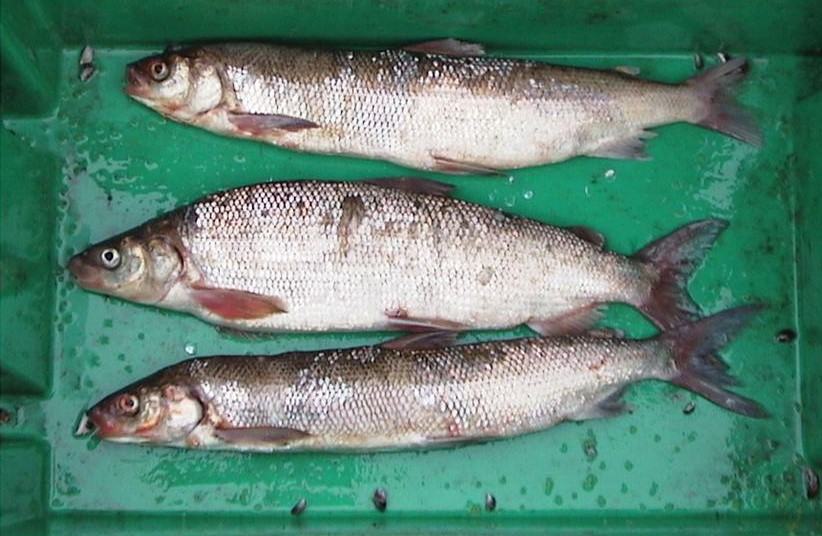
Lake whitefish from Lake Ontario. Note smaller body size of top and bottom fish. November 2000. Credit: J. Hoyle, Ontario Ministry of Natural Resources.

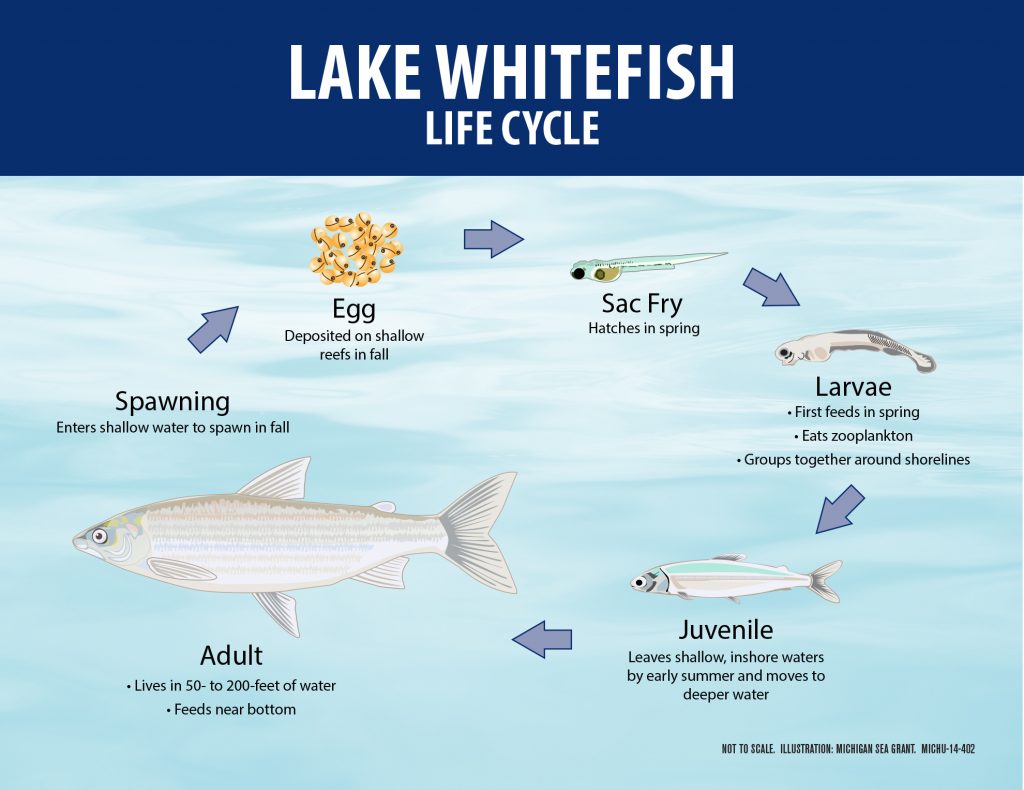
Lake whitefish (Coregonus clupeaformis) are a native species to the Great Lakes that are a popular and valuable commercial fish. Related to salmon and trout, they are prized for their exceptional flavor and are economically valuable to the Great Lakes. They live and feed in the benthic zone of the lakes – in the dark, cool depths near the lake bottom. Lake whitefish prefer cool water and spend much of their time offshore except during the spawning run in late fall where they migrate to shallow reefs, rocky channels, and rivers to lay their eggs. Eggs then overwinter in those locations and hatch in the early spring, when the larval fish begin looking for food. Their diet historically consisted of an energy-rich, shrimp-like amphipod called diporeia. However, diporeia have been in drastic decline in the Great Lakes over the past several decades, so lake whitefish must find poorer quality food such as mussels, other invertebrates, and small fish to eat.

Why are Lake Whitefish Popular?

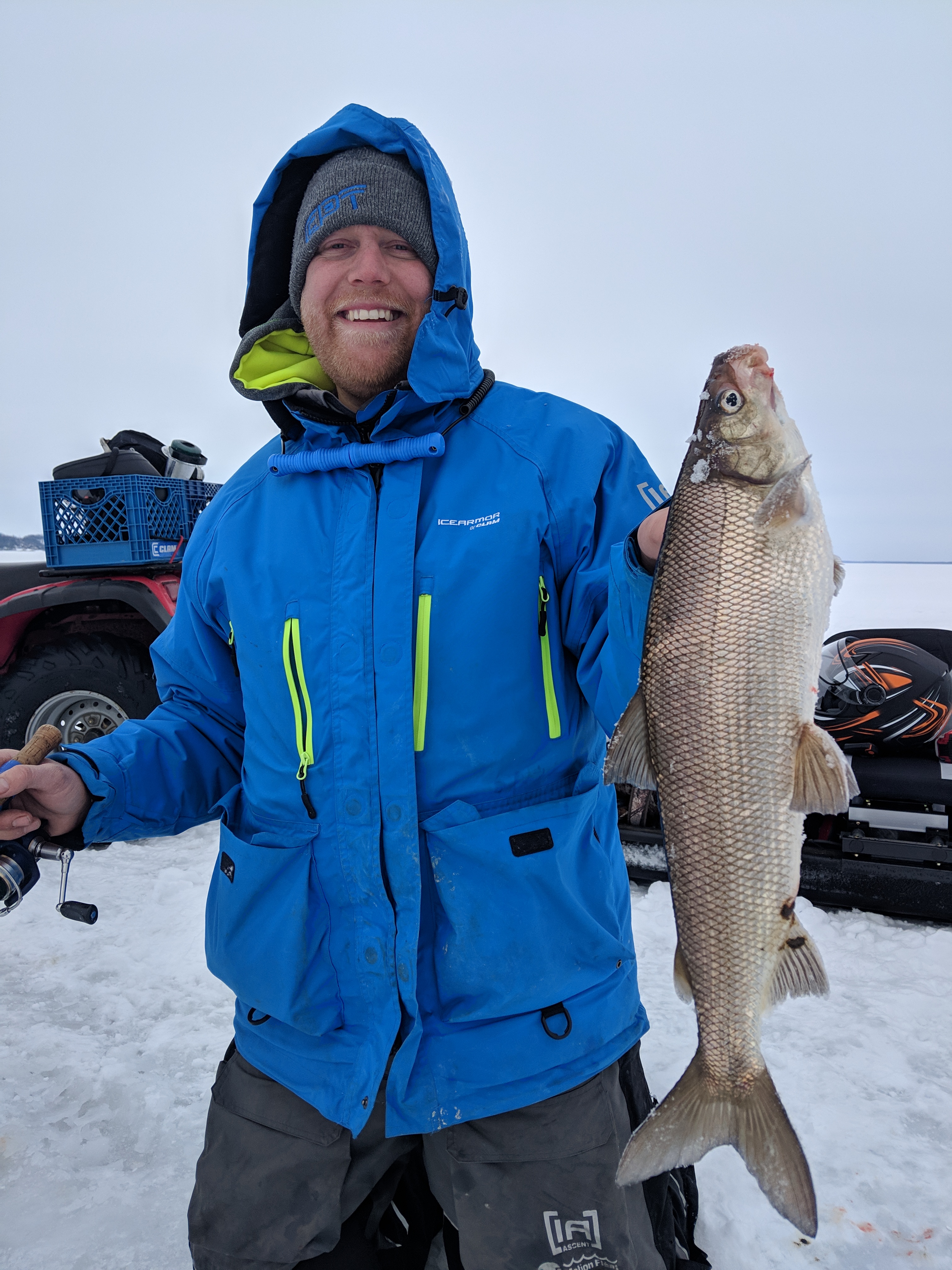
Lake whitefish have long been an important commercial fishery in the Great Lakes. According to the Michigan Sea Grant, in 2020 they made up 89 percent of the catch in Michigan commercial fisheries and 95 percent of the sales. Well known for their mild flavor they are likely to end up on restaurant menus throughout the Great Lakes region and beyond. They also support a popular recreational fishery for ice anglers on Green Bay, where over 110,00 fish are caught annually, as well as smaller recreational fisheries around piers throughout the Great Lakes.

Lake whitefish caught by ice fisher Jeff Elliott, biologist with the NOAA Great Lakes Environmental Research Laboratory. Credit: Jeff Elliott.

What is Affecting the Status of Whitefish Populations?

Lake whitefish are showing a decline throughout much of the Great Lakes, especially in the main basin of Lake Michigan. According to the Great Lakes Fishery Commission, commercial harvest in the early 1990s was around 8 million pounds a year, but by 2020, harvests had declined to just above 2 million pounds a year. Recruitment describes the critical process through which fish populations regenerate themselves by laying eggs, producing larval fish that can thrive when conditions and food supplies are optimal before transitioning to mature fish that become desirable for catch. Researchers from GLERL along with partners from other agencies and tribes are working to identify what factors are affecting whitefish recruitment, and identify any recruitment bottlenecks that are contributing to the decline of whitefish populations.

Lake whitefish life cycle: it takes 5 to 7 years for a whitefish to mature to adulthood. Credit: Michigan Sea Grant. https://www.michiganseagrant.org/topics/ecosystems-and-habitats/native-species-and-biodiversity/lake-whitefish/

How are We Investigating Whitefish Recruitment?

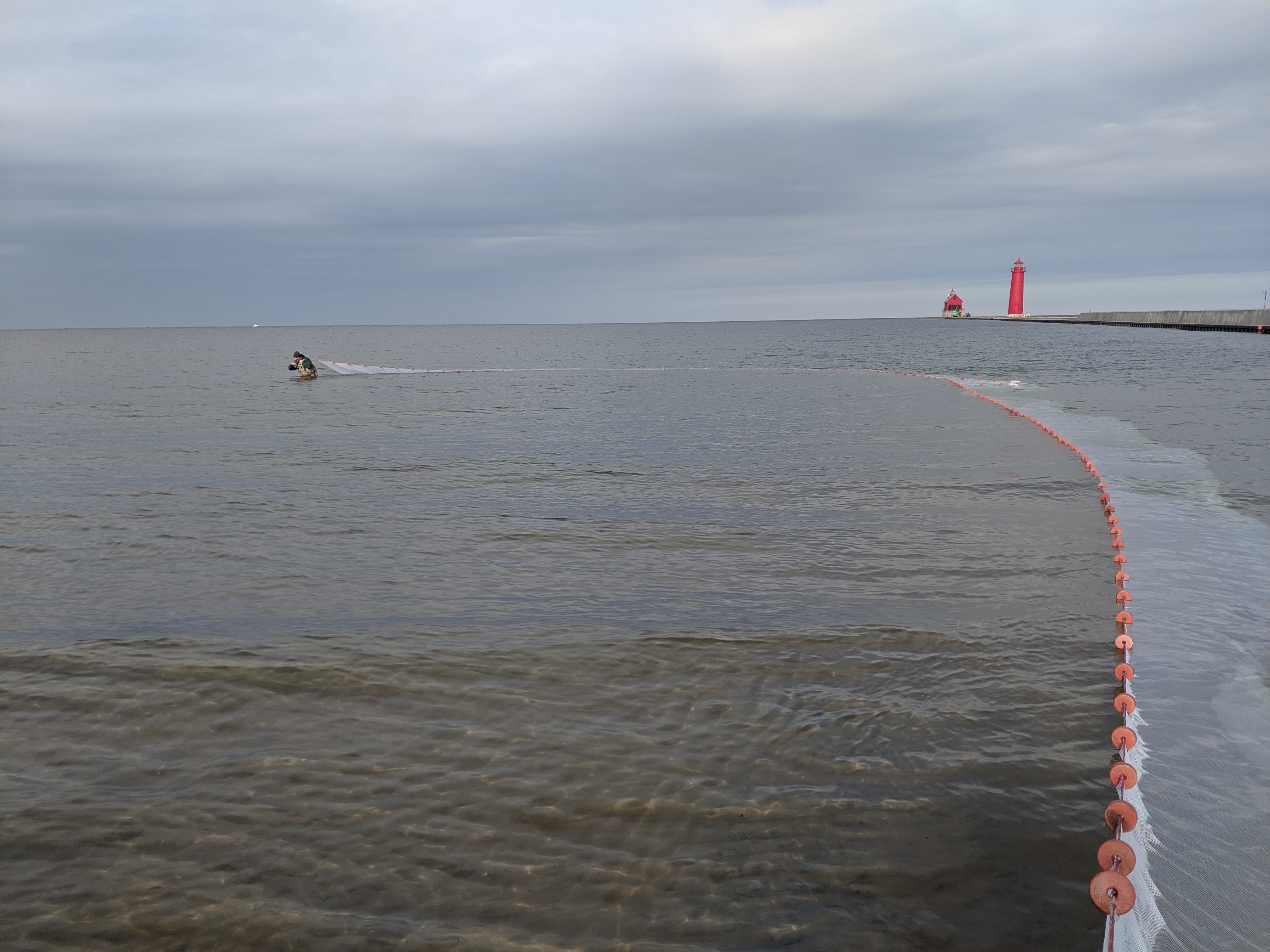
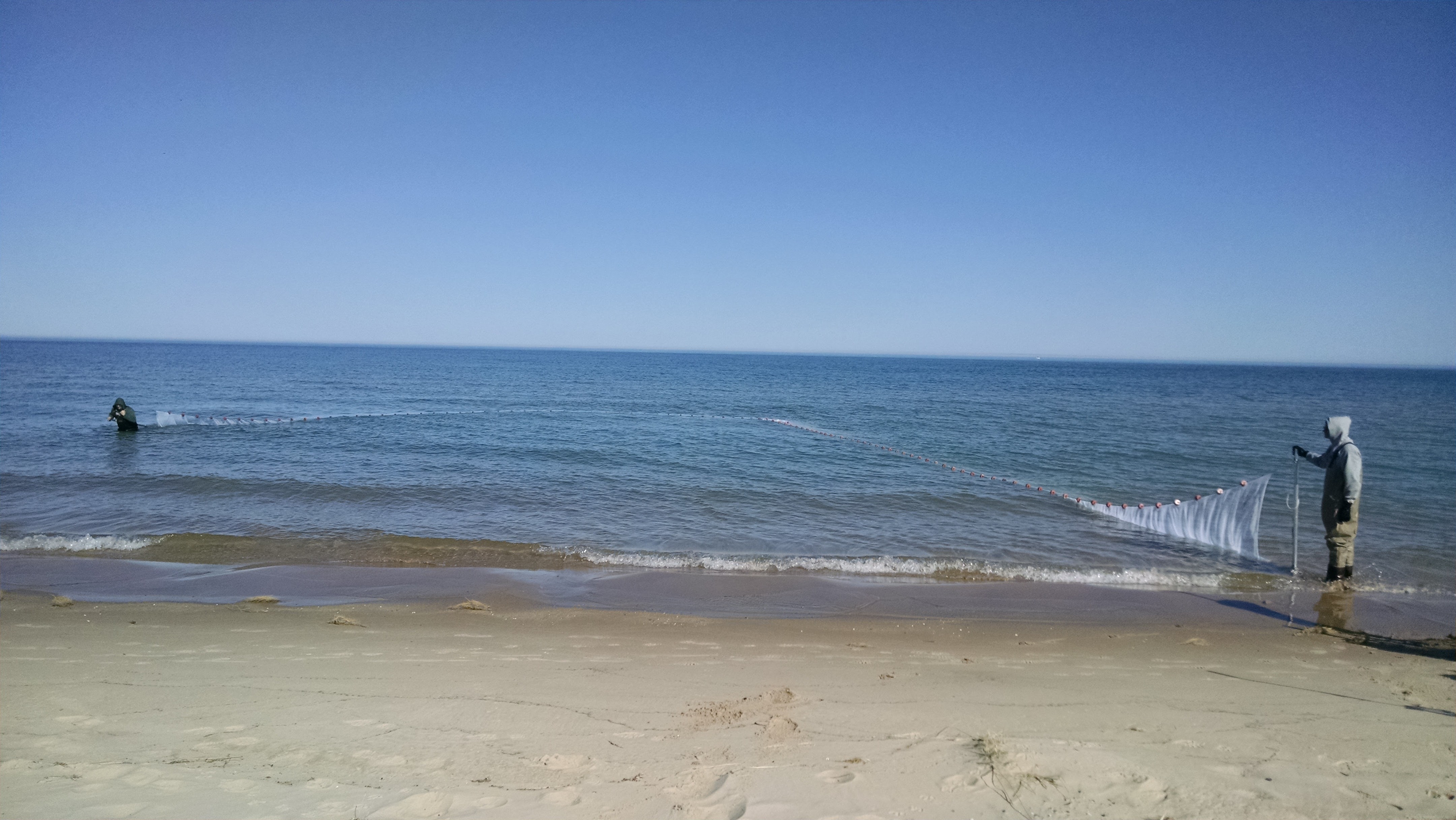
Beach seine net being deployed by biologists from NOAA’s Great Lakes Environmental Research Laboratory in Grand Haven, Michigan. Credit: NOAA/GLERL.

After hatching in late winter, larval lake whitefish spend their time in the nearshore areas of the lakes. They need a steady supply of food in order to thrive and grow, typically eating zooplankton in the water. Researchers are able to capture larval fish for studies in this habitat by manually pulling a seine net along the beach. The seine is a 150 foot long mesh net that is pulled out from the beach and then manually worked back towards the shore. Any fish captured in the seine are concentrated to the back of the net for easier sorting.

Biologists from the Great Lakes Environmental Research Laboratory seining for larval lake whitefish in Muskegon, Michigan. Credit: NOAA/GLERL.

Spottail shiners, banded killifish, round gobies, and emerald shiners are all common bycatch species; those are counted and returned to the water. Any whitefish captured are counted, measured, and their diet is analyzed by examining their stomach contents under a microscope. Additionally, lake and weather conditions are recorded, such as water temperature, dissolved oxygen, pH, substrate, wave height, wind speed and direction. A zooplankton sample is also taken to allow researchers to compare what’s in the water to what the whitefish have eaten to estimate how much food is available to them.

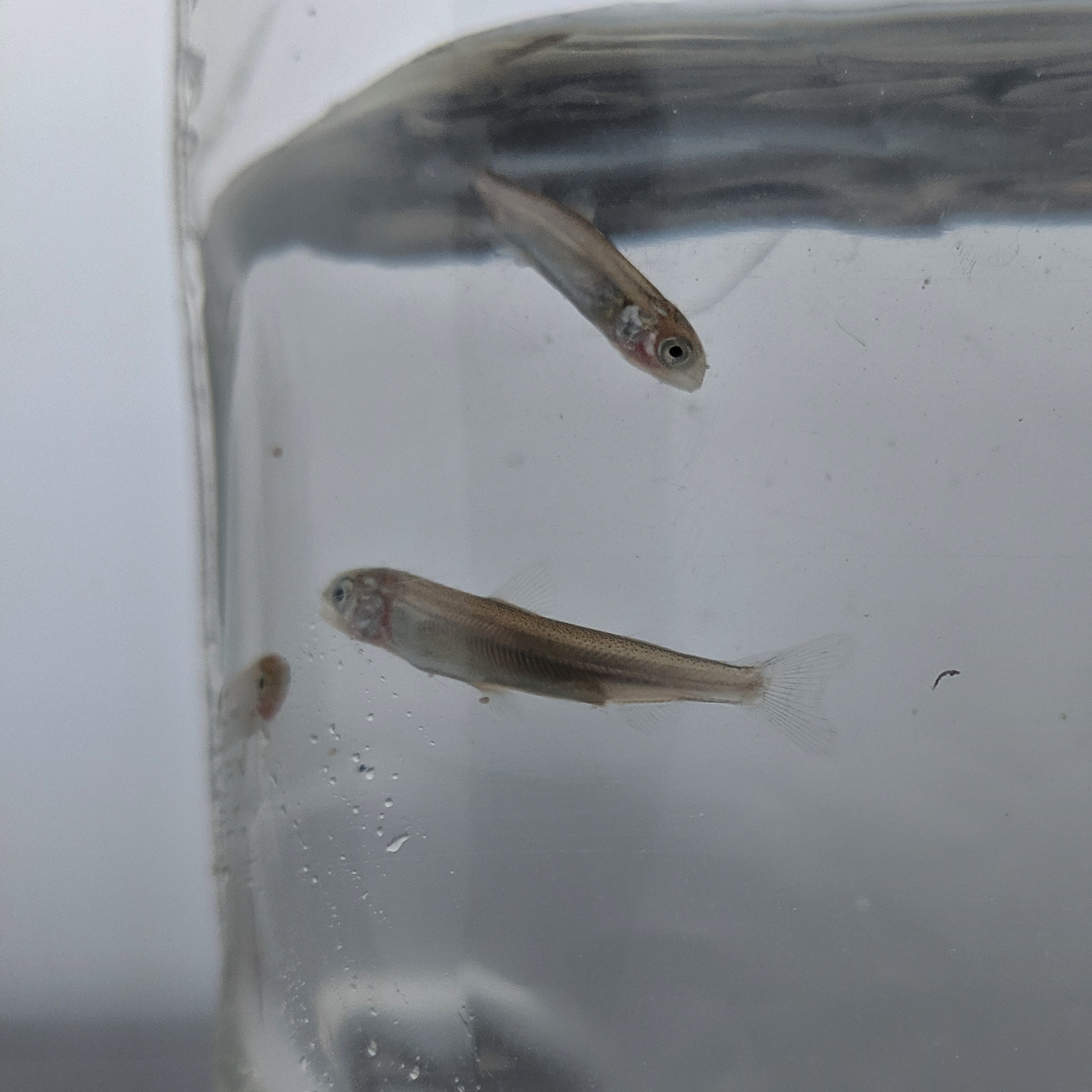
Larval lake whitefish caught by GLERL biologists in a seine net. Credit: NOAA/GLERL.

Biologists at GLERL’s Lake Michigan Field Station in Muskegon, MI have been using seine nets to sample larval whitefish on the beaches near Muskegon, Grand Haven, and Montague every spring since 2014. This long term dataset is important for understanding the health of the fishery as it takes whitefish five to seven years to recruit to full adulthood. Once larval whitefish have been captured at each site and examined in the laboratory, GLERL biologists can study ecological changes that are happening over time to understand how likely young fish will be recruited to adult stages and become part of the commercial fishery.

How are Larval Whitefish Doing?

Captured larval lake whitefish swimming in container. Credit: NOAA/GLERL.

During most years, larval fish numbers have been low in GLERL sampling in southeast Lake Michigan, indicating there will be fewer fish to grow to adult life phases than historical numbers show. Furthermore, even during the years when catch numbers were highest, there was little evidence in subsequent surveys of mature whitefish by the Michigan Department of Natural Resources that these fish survived to adulthood, reflecting poor recruitment. One reason may be that these fish do not have enough food to quickly grow beyond the larval stage (where they are vulnerable to predators or starvation). GLERL’s diet analyses indicate that larval lake whitefish require certain types and sizes of food at different phases of life. In order to thrive, larval whitefish and the right types of food (i.e., different species of zooplankton or larger prey) have to be in synchrony in order for the whitefish to successfully survive and grow into their next stage of life. Many factors can affect this harmony, including competitors such as invasive mussels, predators, and how winter and spring weather conditions are suitable for both plankton and fish larvae. GLERL’s research is used by fishery managers to determine how to manage sustainable and profitable fisheries in Lake Michigan and the other Great Lakes. Beach seining surveys of larval whitefish have become a critical clue on why fishery catches have dropped in the Great Lakes. This study is very important to fishery managers who are working to ensure Great Lakes fisheries are sustainable and profitable, and people are able to enjoy whitefish on their table for many years to come.

March 24, 2025
by GLERL Communications Team
Comments Off on Following the Great Lakes’ Most Unwanted

Following the Great Lakes’ Most Unwanted

GLANSIS Database Keeps Tabs on Biological Invaders

The mouth of an invasive sea lamprey, one of the most notorious Great Lakes invasive species. Photo credit: Dave Brenner, Michigan Sea Grant.

The Great Lakes are one of the most unique freshwater ecosystems in the world – but are also heavily threatened by biological invaders. Aquatic invasive and nuisance species are the plants and animals from other regions of the globe that accidentally get brought to the Great Lakes, potentially destroying the local ecosystem. Many species pose a significant threat to the Great Lakes environment and economy, from sea lamprey that devastate prized fisheries, zebra mussels that encrust underwater infrastructure, and aquatic weeds that entangle boat motors and swimmers alike. There are nearly 200 nonindigenous aquatic species currently present in the Great Lakes, many of which have significant environmental and socioeconomic impacts, and keeping track of them across the region is a daunting task. The Great Lakes Aquatic Nonindigenous Species Information System (GLANSIS) is designed to meet this challenge, providing a “one-stop shop” for comprehensive information about aquatic invaders.

GLANSIS is based out of NOAA’s Great Lakes Environmental Research Laboratory (GLERL) and is the Great Lakes hub of the USGS Nonindigenous Aquatic Species (NAS) database. According to Acting GLERL Director Dr. Jesse Feyen, “GLERL experts have long studied the impacts of current and potential invaders in the Great Lakes. As the long-standing home for GLANSIS, our goal is to get the message out about the significant risks they pose.” With funding from the Great Lakes Restoration Initiative (GLRI), the site provides the best available information to limit the introduction, spread, and impact of aquatic invasive species in the Great Lakes. GLANSIS provides a comprehensive set of tools including species profiles, a custom-generated list of invaders, a mapping tool, risk assessments, and more. While GLANSIS was originally designed for use by scientists and environmental managers, this publicly-accessible tool is used by teachers, students, anglers, property owners, and anyone who wants to learn more about stopping invasive species in the Great Lakes. Citizens and stakeholders can help protect their local waterways by learning how to recognize, report, and stop the spread of aquatic invasive species.

The Great Lakes’ Most Unwanted

As of 2025, GLANSIS maintains species profiles of 192 nonindigenous aquatic species that are successfully reproducing and overwintering in the Great Lakes, including fish, plants, invertebrates, algae, and even parasites and diseases. GLANSIS conducts a thorough risk assessment process on all species which facilitates direct comparisons of their impacts, as shown in a recent paper on the top 10 most impactful invaders published in the Journal of Great Lakes Research.

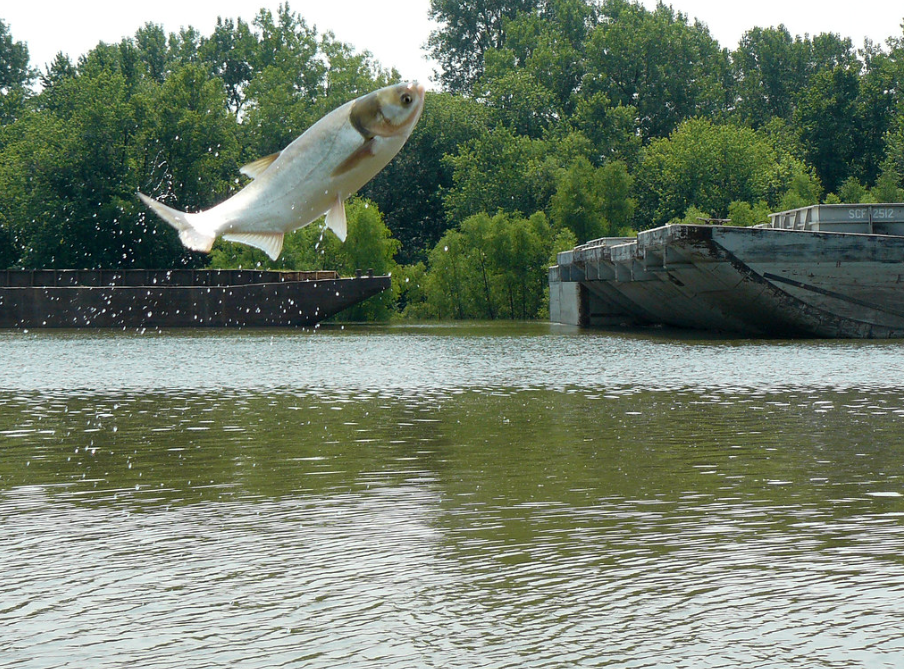
GLANSIS also hosts data on “watchlist” species – plants, animals, and pathogens that have not yet established lasting populations in the Great Lakes, but have been identified by experts as emerging threats. These include invasive silver and bighead carp, which have caused devastating ecological impacts to native fish and plants as they have expanded through other US waterways, as well as aquarium plants and pets like the self-cloning marbled crayfish, where even a single individual can launch a new invasive population.

Invasive silver carp are not reproducing and overwintering in the Great Lakes – yet. Photo credit: Dan O’Keefe, Michigan Sea Grant.

The GLANSIS team recently brought together more than a dozen invasive species experts for a real-time virtual review to provide new data on more than 50 non-native species that are either already present in the Great Lakes basin or have been identified as an emerging threat. These efforts ensure that the information in the database remains accurate, timely and relevant to environmental managers, educators, and other user groups who rely on GLANSIS for decision-making about aquatic invasive species.

To learn more about GLANSIS and explore the database yourself, visit https://www.glerl.noaa.gov/glansis/ or contact GLANSIS Program Manager Rochelle Sturtevant at rochelle.sturtevant@noaa.gov.

February 26, 2025
by Gabrielle Farina
Comments Off on NOAA GLERL director retires after 40-year career in managing America’s water resources

NOAA GLERL director retires after 40-year career in managing America’s water resources

After more than 40 years of civil service, Deborah Lee, NOAA Great Lakes Environmental Research Laboratory (GLERL) director, is retiring on February 28, 2025. Known for her passion for managing our nation’s water resources, Lee has been a dedicated and innovative steward of our nation’s freshwater, benefiting people, the environment, and the economy.

A GLERL hydrologist at the time, Lee stands at the NOAA GLERL sign with colleagues Frank Quinn, Tom Croley, and Dave Reid in the 1990s.

As an award-winning and nationally recognized engineer and professional hydrologist, Lee’s career was divided between time at NOAA and the U.S. Army Corps of Engineers. Early in her career she served as a hydrologist at NOAA GLERL and then for the NOAA National Weather Service (NWS) Ohio River Forecast Center. Her leadership and management skills grew and were acknowledged during her time with the U.S. Army Corps of Engineers where she served as Chief of the Water Management of the Great Lakes and Ohio River Division and as its Acting Regional Business Director.

Lee is awarded a Superior Civilian Service Award on her last day serving at the U.S. Army Corps of Engineers.

As GLERL director over the past ten years, Lee applied her expertise in the region to create partnerships that accelerated GLERL’s research to application on some of the Great Lakes most pressing issues. She oversaw the transitioning from research to operations of NOAA’s Harmful Algal Bloom (HAB) forecast to NOAA’s National Centers for Coastal Ocean Science, and of the Great Lakes Operational Forecast System (GLOFS) to NOAA’s Center for Operational Oceanographic Products and Services. The GLOFS is used by NWS to predict Great Lakes water levels, temperature, currents and waves in its marine forecasts, and by the U.S. Coast Guard for search and rescue operations. She also fostered GLERL’s ‘Omics program and the important research that predicted the potential impact to the fishery from invasive carp. 

Lee celebrates the 50th anniversary of NOAA’s Great Lakes Environmental Research Laboratory in 2024.

Lee’s legacy reaches far beyond NOAA. First, with her position as Regional Team Lead for NOAA’s Great Lakes Regional Collaboration Team, she represented NOAA in the execution of the binational Great Lakes Water Quality Agreement with Canada and led NOAA’s mission under the Great Lakes Restoration Initiative where she built several successful regional coalitions across the U.S. and Canada and with private industry. Her creativity, adaptability and resilience helped her align these program efforts with NOAA’s vision, mission, and goals in partnering with stakeholders inside and outside of NOAA. She also served as the U.S. Co-chair of the International Joint Commission’s Science Advisory Board’s Research Coordination Committee. Always open to new and challenging assignments, Lee took on the leadership roles as the Co-chair of the Aquatic Nuisance Species Task Force and as Senior Advisor to the National Invasive Species Council.

Lee receives Lifetime Achievement Award from the Environmental & Water Resources Institute of the American Society of Civil Engineers in 2024.

Lee has been recognized with numerous professional awards throughout her career, including The Ohio State University Distinguished Alumni Award, the American Society of Civil Engineers Environmental Water Resources Institute Lifetime Achievement Award and President’s Medal, and nominated by Eminence to the American Academy of Water Resources Engineers.

Join us in thanking Director Lee for her profound impact on NOAA Research and the Great Lakes region throughout her remarkable career!

February 14, 2025
by Gabrielle Farina
Comments Off on Fall in love with the science behind NOAA GLERL’s valentines

Fall in love with the science behind NOAA GLERL’s valentines

Happy Valentine’s Day from NOAA’s Great Lakes Environmental Research Laboratory! Here’s a look at the Great Lakes science that inspired our GLERL-themed valentines.

Lake Erie’s central basin is a vital drinking water source for over two million people along the Ohio coast, but drinking water treatment plants in this region face significant challenges during the summer. The lake water stratifies, creating a distinct separation between warm surface water and cold, dense bottom water. The deep water often becomes hypoxic (low in dissolved oxygen) and has a low pH and elevated levels of iron and manganese. This hypoxic environment is typically inhospitable to many animals. Strong wind events can cause upwelling, bringing this cold, hypoxic bottom water to the surface near the lakeshore, which can interfere with the drinking water treatment process.

To address this issue, NOAA GLERL and the Cooperative Institute for Great Lakes Research developed a forecast model of hypoxia and circulation in Lake Erie to alert decision makers of when upwelling may bring hypoxic water to the shore. The hypoxia forecast is now being maintained by NOAA’s National Centers for Coastal Ocean Science. Learn more

Remote sensing is the science of obtaining information about objects or areas from a distance, typically from aircraft or satellites. One method of remote sensing is the use of airborne hyperspectral cameras, which contain many more bands of discrete wavelengths than photos from a typical camera. NOAA GLERL scientists use these images to study properties like turbidity and chlorophyll during the winter and harmful algal blooms in the summer.

NOAA GLERL’s experimental Great Lakes Coastal Forecasting System (GLCFS) is an experimental set of hydrodynamic computer models that predict lake circulation and other physical processes, such as thermal structure, wind, short-term water level changes, and ice dynamics. These research models provide timely information on currents, water temperatures, short-term water level fluctuations (e.g. seiche, storm surge), and ice out to 120 hours into the future.

NOAA GLERL has been exploring the relationships between ice cover, lake thermal structure, and regional atmospheric patterns for over 30 years. Our research focuses on historical model simulations and observations of ice cover, surface water temperature, and other variables. Studying, monitoring, and predicting ice cover on the Great Lakes is important because ice plays an important role in determining regional weather, timing of evaporation, water movement patterns, water temperature structure, and spring plankton blooms.

Harmful algal blooms (HABs) in the Great Lakes occur when algae grow rapidly, forming dense scums and water discoloration. Some blooms can produce neurotoxins, liver toxins, or skin irritants and can be very dangerous to come into contact with. These blooms can contaminate drinking water, harm swimmers and pets in areas where toxins are concentrated, and pose a severe nuisance to recreational and commercial boating and fishing.

NOAA GLERL’s HAB research focuses on understanding and predicting blooms by integrating monitoring and real-time observations, forecasting and 3-D modeling, and remote sensing. NOAA GLERL research on the formation, duration and toxicity of HABs is used to create products for stakeholders, coastal communities, and the public for making important decisions, such as managing drinking water treatment plants. Learn more and access NOAA GLERL’s HAB data.

Much of NOAA GLERL’s Great Lakes science would not be possible without our fleet of research vessels. The R/V Laurentian is NOAA GLERL’s largest vessel and one of our most important assets. Added to our research fleet in 2002, the 80-foot vessel has many unique features that make it a fundamental component of our Great Lakes science. The Laurentian is based out of GLERL’s Lake Michigan Field Station in Muskegon, MI and supports a large portion of our ecosystem research, including lower food web dynamics, benthic surveys, and winter ecology.

NOAA GLELRL’s Realtime Coastal Observation Network (ReCON) consists of high-tech buoys across the Great Lakes that collect meteorological data as well as chemical, biological, and physical data below the lake surface. In the western basin of Lake Erie and Lake Huron’s Saginaw Bay, our buoys help us monitor algal bloom conditions in near real time.

December 19, 2024
by Gabrielle Farina
Comments Off on NOAA GLERL prepares for 2025 ice season

NOAA GLERL prepares for 2025 ice season

As we settle into winter in the Great Lakes region, many people are looking to NOAA’s Great Lakes Environmental Research Laboratory for information about the 2025 ice season. Here are some common questions about this year’s ice and our ice research, answered by a team of NOAA GLERL scientists.

What is the Great Lakes ice forecast for 2025?

The U.S. National Ice Center’s official seasonal outlook for Great Lakes ice predicts slightly below normal ice conditions on Lakes Superior, Michigan, Huron and Erie this winter. Near normal ice conditions are predicted for Lake Ontario. Read the full outlook here.

How does NOAA GLERL research ice cover?

NOAA GLERL has been exploring the relationships between ice cover, lake thermal structure, and regional climate for over 30 years through historical model simulations and observations of ice cover, surface water temperature, and other variables. Studying, monitoring, and predicting ice cover on the Great Lakes is important because ice plays an important role in determining regional weather, timing of evaporation, water movement patterns, water temperature structure, and spring plankton blooms.

NOAA GLERL and the U.S. National Ice Center have been collecting detailed ice cover data via satellite imagery since 1973. When it comes to analyzing each year’s data, we compare the current year to historical data in two major ways. The annual maximum ice cover (AMIC) is simply the highest measurement of ice cover that we see in a single ice season. While it’s interesting to look at peak ice cover every year, we also look at average ice cover throughout the entire season. Generally, looking at seasonal average ice cover is more relevant than AMIC for studying long term trends. For example, a short-lived cold air outbreak can cause a peak in maximum ice cover, even if the seasonal average was low for the rest of the year.

When does the Great Lakes ice season start?

The northern Great Lakes can start to see ice as early as late November or early December. NOAA GLERL begins tracking ice cover and updating our ice products for the season in early December. Low ice cover in December is normal, with the majority of ice growth historically occurring in January and February. Ice cover for mid-December typically runs between 1-2%. Access lakewide ice cover data for the 2025 season here.

“We expect a mild ice season in 2025,” says Dr. Jia Wang, ice climatologist at NOAA GLERL. Interannual variability of Great Lakes ice cover is heavily influenced by four large-scale climate patterns, referred to as teleconnections: the North Atlantic Oscillation (NAO), the Atlantic Multidecadal Oscillation (AMO), the El Nino/Southern Oscillation (ENSO) and the Pacific Decadal Oscillation (PDO). 

“This year, both AMO and PDO are bringing very strong warm weather conditions to the Great Lakes region,” says Dr. Wang. “This will overwhelm the cooling caused by this year’s neutral ENSO conditions, so a mild winter is likely.” 

What ice products and resources does NOAA GLERL have?

The NOAA Great Lakes Coastwatch Program provides satellite environmental data and products for near real-time observation of the Great Lakes. CoastWatch products help support water-dependent industries such as hydropower, fishing, commercial shipping, and search and rescue operations. The CoastWatch Great Lakes Ice Concentration Statistics page includes graphs and datasets for lakewide average ice concentrations, as well as comparisons to historical data.

Graph of Lake Superior average ice concentrations, 1973-2025.

The CoastWatch Great Lakes Surface Environmental Analysis (GLSEA) is a digital map of Great Lakes surface water temperature and ice cover, and is produced daily and derived from NOAA satellite imagery. Lake surface temperatures and ice cover conditions are updated daily with information from the cloud-free portions of the previous day’s satellite imagery.⁣

Daily GLSEA map from NOAA Great Lakes CoastWatch.

The Experimental Great Lakes Coastal Forecasting System (GLCFS) is an experimental set of hydrodynamic computer models that predict lake circulation and other physical processes, such as thermal structure, wind, short-term water level changes, and ice dynamics. Access GLCFS ice animations for each lake below.

GLERL’s 2025 Ice Cover page includes daily ice cover maps and a Great Lakes average ice cover graph.

Daily ice charts available on NOAA GLERL’s 2025 Ice Cover page.
Great Lakes average ice cover graph available on NOAA GLERL’s 2025 Ice Cover page.

Our Historical Ice Cover page provides graphs and datasets for historical Great Lakes ice cover back to 1973. Our historical ice data is critical to predictive modeling efforts and establishes a foundation for understanding the influence of ice on the regional economy and environment.

Animated map showing maximum Great Lakes ice cover from 1973 to 2024. Access an interactive version here.

To better understand ice formation and the types of ice in the Great Lakes, NOAA GLERL and the U.S. Coast Guard use Synthetic Aperture Radar (SAR) data from the NOAA CoastWatch Great Lakes Node to monitor six different types of ice, ice thickness, and ice cover. This risk assessment tool is known as the Ice Condition Index (ICECON). The U.S. Coast Guard uses ICECON to identify areas that require ice breaking operations and ship transit assistance. These ice breaking operations allow government and commercial ships to travel through the Great Lakes unobstructed.

ICECON image of Lake Huron from January 2023 via NOAA Great Lakes CoastWatch.

All of NOAA GLERL’s ice products are also accessible from our Great Lakes Ice Cover homepage.

Why do NOAA GLERL’s ice records only go back to 1973?

The early 1970s is when we first had reliable satellite data with which to construct more accurate and complete datasets. Before the satellite era, information during the winter about ice concentration away from the shoreline was very limited. This is why we only use the 52-year dataset for our calculations, as this represents the highest quality data.

Is ice cover related to evaporation and water levels?

To form ice, the lake’s surface requires a loss of heat and moisture from evaporation in the late fall and early winter. While Great Lakes water levels are generally lowest in the winter, most of the evaporation from the lakes actually happens in the fall. This is because in the fall, cooler and drier air flows over the warmer lake waters. This contrast in temperature and moisture between the air and water helps to increase the evaporation from the water, causing a decline in water levels. Once ice has formed on the lake, its presence does reduce the amount of evaporation at that time. 

The graphic below illustrates the seasonal cycles that Great Lakes water levels undergo every year. Learn more about Great Lakes water levels and water temperatures in our recent pre-winter Q&A.

Graphic showing land in the background and water in the foreground, divided into four panels corresponding with the seasons. Text describes the water level changes throughout the year: Winter low, spring rise, summer peak, and fall decline.
Infographic showing seasonal water level changes on the Great Lakes.

Why is ice cover important?

Great Lakes communities have strong economic ties to ice cover on the lakes, and changes in ice cover can have big impacts on the people living there. Many local businesses in the region rely on ice fishing and outdoor sports, which can only happen if the ice is thick and solid. Commercial shipping schedules are heavily impacted by the formation of ice as well.

Ice is a natural part of the Great Lakes yearly cycle and many animal species, from microbial to larger fauna, rely on the ice for protecting young and harboring eggs. There’s increasing evidence that the ice plays a role in regulating many biological processes in the water throughout the winter. The Great Lakes also see most of their significant storms and large wave events during the colder months of late fall through winter. The shorebound ice sheets act as an important buffer against these waves, protecting the coast from erosion and damage to shoreline infrastructure.

Additional Resources

Fact Sheet: Ice Cover Research at NOAA GLERL

NOAA GLERL Ice Cover Homepage

NOAA GLERL ice cover photos

December 2, 2024
by Gabrielle Farina
Comments Off on Lake effect snow: What, why and how?

Lake effect snow: What, why and how?

MODIS satellite image of a lake effect snow event in the Great Lakes, caused by extensive evaporation as cold air moves over the relatively warm lakes. November 20, 2014. Credit: NOAA Great Lakes CoastWatch.

What is lake effect snow?

In the Great Lakes region, hazardous winter weather often happens when cold air descends from the Arctic region. Lake effect snow is different from a low pressure snow storm in that it is a much more localized and sometimes very rapid and intense snow event. As a cold, dry air mass moves over the unfrozen and relatively warm waters of the Great Lakes, warmth and moisture from the lakes are transferred into the atmosphere. This moisture then gets dumped downwind as snow.

Graphic via NOAA National Weather Service

Lake Effect Snow Can Be Dangerous

Lake effect snow storms can be very dangerous. For example, 13 people were killed by a storm that took place November 17-19, 2014 in Buffalo, New York. During the storm, more than five  feet of snow fell over areas just east of Buffalo, with mere inches falling just a few miles away to the north. Not only were lives lost, but the storm disrupted travel and transportation, downed trees and damaged roofs, and caused widespread power outages. Improving lake effect snow forecasts is critical because of the many ways lake effect snow conditions affect commerce, recreation, and community safety. 

Why is lake effect snow so hard to forecast?

There are a number of factors that make lake effect snow forecasting difficult. The widths of lake-effect snowfall bands are usually less than 3 miles — a very small width that makes them difficult to pinpoint in models. The types of field measurements scientists need to make forecasts better are also hard to come by, especially in the winter!  We would like to take frequent lake temperature and lake ice measurements, but that is difficult to do during the winter, as conditions are too rough and dangerous for most research vessels and buoys. (However, NOAA is making progress towards expanding our Great Lakes winter observation capabilities!)

Satellite measurements can also be hard to come by, as the Great Lakes region is notoriously cloudy in the winter. It’s not uncommon to go for over a week without usable imagery.

Lake Effect Snow animation: This mid-December 2016 lake effect snow event resulted in extremely heavy snow across Michigan, Ohio, upstate New York as well as the province of Ontario east of Lake Superior and Huron.

NOAA GLERL and CIGLR work to improve lake effect snow forecasting

Currently, NOAA Great Lakes operational models provide guidance for lake effect snow forecasts and scientists at NOAA GLERL and the Cooperative Institute for Great Lakes Research (CIGLR) are conducting studies to improve them. 

They use data from lake effect snow events in the past and compare how a new model performs relative to an existing model.  One way to improve forecast model predictions is through a model coupling approach, or linking two models so that they can communicate with each other. When they are linked, the models can share their outputs with each other and produce a better prediction in the end.

Research published by CIGLR, GLERL and other research partners, “Improvements to lake-effect snow forecasts using a one-way air-lake model coupling approach,” is part of a series of studies (see list below) that help to make lake effect snow forecasts better. This study takes a closer look at how rapid changes in Great Lakes temperatures and ice impact regional atmospheric conditions and lake-effect snow. Rapidly changing Great Lake surface conditions during lake effect snow events are not accounted for in existing operational weather forecast models. The scientists identified a new practical approach for how models communicate that does a better job of capturing rapidly cooling lake temperatures and ice formation. This research can result in improved forecasts of weather and lake conditions. The models connect and work together effectively and yet add very little computational cost. The advantage to this approach in an operational setting is that computational resources can be distributed across multiple systems.

Study model run: This panel of images shows model runs that looks at data from a lake effect snow event from January 2018 with and without the new type of model coupling. The image on the far right labeled Dynamic – Control Jan 06 shows the differences in air temperature (red = warmer, blue = colder) and wind (black arrows) when the models are coupled. The areas in color show how the new model coupling changed the model output considerably and improved the forecast.

Our lake effect snow research continues

Our lake effect modeling research is ongoing, and NOAA GLERL, CIGLR, NOAA NWS Detroit, the NOAA Global Systems Laboratory continue to address the complex challenges and our studies build upon each other to improve modeling of lake-effect snow events. A future focus will be on running the models on a smaller grid scale and continuing to work to improve temperature estimates as both are key to forecasting accuracy. 


Related news articles and blog posts: 

Improving Lake Effect Snow Forecasts

Improving lake effect snow forecasts by making models talk to each other

Related research papers: 

Fujisaki-Manome et al. (2022) Forecasting lake-/sea-effect snowstorms, advancement, and challenges

Fujisaki-Manome et al. (2020) Improvements to lake-effect snow forecasts using a one-way air-lake model coupling approach. 

Anderson et al. (2019) Ice Forecasting in the Next-Generation Great Lakes Operational Forecast System (GLOFS)

Fujisaki-Manome et al. (2017) Turbulent Heat Fluxes during an Extreme Lake-Effect Snow Event

Xue et al. (2016) Improving the Simulation of Large Lakes in Regional Climate Modeling: Two-Way Lake-Atmosphere Coupling with a 3D Hydrodynamic Model of the Great Lakes